
 5 months ago
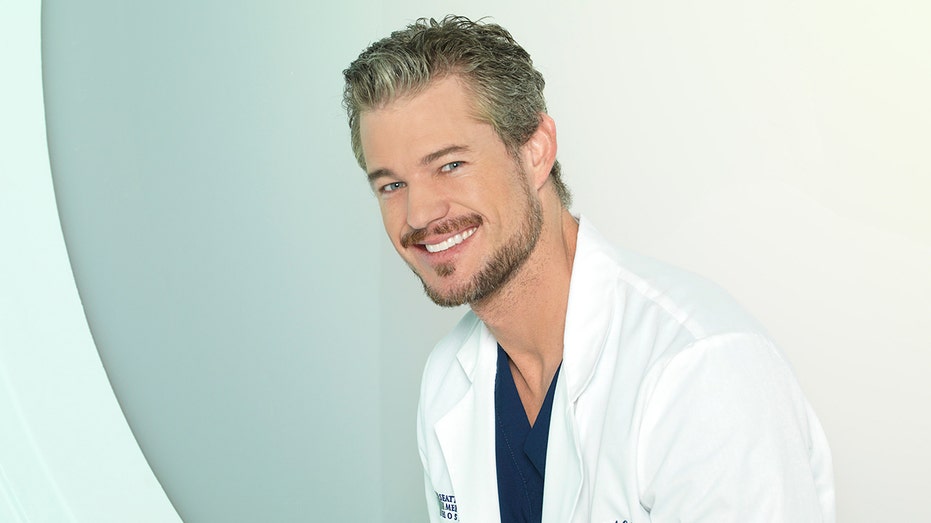
Eric Dane’s death has sparked conversations about the speed and severity of ALS.
Also known as Lou Gehrig’s disease, the progressive illness — officially called amyotrophic lateral sclerosis — is debilitating and fatal.
While only about 5,000 people in the U.S. are diagnosed each year, the average life expectancy is just two to five years, according to the ALS Association.
Dane, who most famously starred as Dr. Mark "McSteamy" Sloan on ABC's "Grey’s Anatomy," announced his diagnosis in April 2025, telling "Good Morning America" in June that his first symptoms began as "some weakness" in his right hand.
‘GREY’S ANATOMY' STAR ERIC DANE DEAD AT 53
"I didn't really think anything of it," the actor said. "At the time, I thought maybe I'd been texting too much, or my hand was fatigued. But a few weeks later, I noticed that it got a little worse."
"I'm fighting as much as I can," Dane added. "There's so much about it that's out of my control."
ALS is a progressive disease where the brain loses connection with the muscles, according to the ALS Association. This slowly strips a person’s ability to walk, talk, eat, dress, write, speak, swallow and, eventually, breathe.
Early signs include muscle weakness, stiffness and cramping. Symptom progression and severity are different for each case, as the association notes there is "no single timeline for ALS."
REBECCA GAYHEART STEPS UP AS CAREGIVER FOR ESTRANGED HUSBAND ERIC DANE AS ALS DEMANDS 24-HOUR CARE
The disease only impacts motor neurons controlling voluntary movement, so the five senses — sight, touch, hearing, taste and smell — are not affected, nor are the eye muscles or bladder control.
Many ALS patients remain "mentally alert and aware" throughout the disease, the ALS Association reported.
Diagnosis typically occurs in people between the ages of 40 and 70. About 20% of patients live five years or longer. Only about 5% live longer than 20 years.
5 CELEBRITIES WHO WENT PUBLIC WITH ALARMING HEALTH DIAGNOSES IN 2025
ALS is typically diagnosed by a neurologist with an electromyography test (EMG), but can also be detected by blood and urine tests, spinal taps, MRIs and other imaging scans, muscle and nerve biopsies, or neurological exams.
There is currently no cure or treatment to stop disease progression, although there are treatments to slow and ease symptoms, per the ALS Association.
Fox News senior medical analyst Dr. Marc Siegel joined "Fox & Friends" on Friday to discuss the prevalence of ALS, suggesting that cases have increased due to "something in the environment that we don’t know yet."
While ALS is 10% genetic, according to Siegel, 90% of cases do not have a genetic link, pointing toward other risk factors like environmental toxins.
"It's a muscle weakness disease — affecting nerves that innervate muscles — and usually it starts on one side," the doctor shared. "Then you develop fatigue ... You could see a quivering tongue or your arm is quivering, usually one side and then the other side."
CLICK HERE FOR MORE HEALTH STORIES
As the weakness progresses, it impacts speech and ultimately attacks the diaphragm, making it difficult to fully inflate the lungs.
"That’s what happened to [Dane], most likely," Siegel said. "So, it progresses from your arms, your legs, your speech, your swallowing ability and then your breathing."
ALS progresses "pretty rapidly in most cases," Siegel said. While scientist Stephen Hawking lived 55 years with the disease, Dane "probably lived about two years with it," the doctor surmised.
CLICK HERE TO SIGN UP FOR OUR HEALTH NEWSLETTER
"I want to point out how courageous [Dane] is — he actually was involved with Target ALS, where he was fighting for new research," Siegel pointed out. "We're learning to personalize the approach to this disease, and that's the future — and he fought for that."
"We need a lot of money for research for this — [Dane] was asking for a billion dollars from the government."
Various research groups and hospital systems are actively working on new ALS therapies that take a personalized approach, Siegel shared.
The estimated cost to develop a drug that would slow or stop disease progression is $2 billion, the ALS Association has reported. The annual estimated out-of-picket cost for care is $250,000.
TEST YOURSELF WITH OUR LATEST LIFESTYLE QUIZ
Funding for ALS research and awareness has been on the rise for years, with the viral social media ALS Ice Bucket Challenge making a splash in 2014.
The challenge, supported by the ALS Association, was intended to boost awareness. It ultimately raised $115 million toward ALS research and patient care.










 English (US)