
 3 months ago
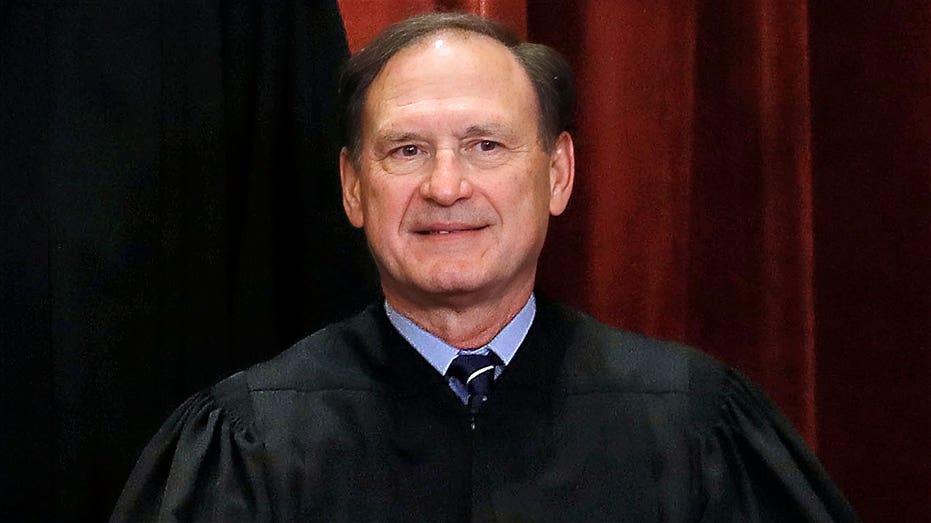
Supreme Court Justice Samuel Alito pushed back on claims this week that ending deportation protections for Haitian migrants was racially motivated, pressing an attorney to explain how that argument works when the policy has been applied broadly to migrants from many countries.
"You have a really large — you have a really broad definition of who’s white and who’s not white," Alito, an appointee of former President George W. Bush, said during oral arguments, challenging a claim leveled by the migrants’ lawyer that the Trump Department of Homeland Security (DHS) intentionally targeted non-white migrants when it decided to terminate their temporary protected status (TPS).
The exchange came as the Supreme Court weighed a high-stakes case over the Trump administration's authority to end TPS protections for tens of thousands of Haitian and Syrian migrants.
The high court's decision could strip their legal protections and have similar implications for hundreds of thousands of other migrants, meaning DHS could then move to detain and deport them.
TRUMP FOES MELT DOWN THAT SCOTUS IS UNLEASHING 'RACIAL TERROR' ON US WITH ICE RAID RULING
Congress created temporary protected status as a form of protection for migrants fleeing war and natural disaster, and the law requires DHS officials to periodically review whether an origin country qualifies under those terms.
Attorney Geoffrey Pipoly, representing the migrants during the oral arguments, argued the courts had some authority to review DHS' temporary protected status decisions and that the government's decision to end the protected status for Haitians, in particular, did not follow the law because it was driven by racial bias against "non-white immigrants."
"The president has disparaged Haitian TPS holders specifically as undesirables from a '----hole country,' and days after falsely accusing them of 'eating the dogs and eating the cats of Americans,' he vowed that he would terminate Haiti's TPS, and that is exactly what happened," Pipoly said.
Alito grilled the lawyer over the claim, noting the government's temporary protected status terminations applied to a range of countries.
"Do you think that if you put Syrians, Turks, Greeks and other people who live around the Mediterranean in a lineup, do you think you could say those people, that all of them, are they all non-white?" Alito asked.
The justice added: "I don’t like dividing the people of the world into these groups."
Alito began to test Pipoly on which bucket he would sort various nationalities into, white versus non-white, leading Pipoly to argue that the bar for finding racial animus was low.
SCOTUS TO REVIEW TRUMP EXECUTIVE ORDER ON BIRTHRIGHT CITIZENSHIP
"Irrespective of how you do the classification … bare dislike of an unpopular group is a sufficient basis," Pipoly said.
The case is centered on whether courts can review the government’s TPS decisions and the processes that went into reaching those decisions. Migrants' lawyers have also made arguments that DHS officials failed to properly assess a country's conditions or relied on unlawful factors, such as whether termination was of national interest.
The Department of Justice (DOJ) told the Supreme Court those decisions are not subject to judicial review and fall solely under the purview of the executive branch. The DOJ warned that allowing challenges could open the door to widespread litigation over immigration policy.
The migrants' lawyers, meanwhile, argued in court papers that the DOJ had taken an "extreme position that would insulate flagrantly unlawful executive action from judicial review."
The conservative justices appeared largely sympathetic to the Trump administration's arguments, while the liberal justices zeroed in on whether Homeland Security's alleged racial bias could be unconstitutional.
Justice Sonia Sotomayor, an Obama appointee, suggested Trump's public claim that migrants are "poisoning the blood of America" would be a violation of constitutional prohibitions on discrimination by the government, since it was "showing that a discriminatory purpose may have played a part in this decision" to end temporary protected status.
Homeland Security has already terminated the legal status of migrants from six countries, including Venezuela and Honduras, moves that the Supreme Court temporarily greenlit through previous emergency requests. The high court is making a decision on the merits regarding the Haitians and Syrians, meaning it will carry finality and could apply more broadly.
The status of migrants from seven other countries remains on hold while the case is pending, including more than 6,000 Syrian and almost 350,000 Haitian migrants, as well as those from Ethiopia, Myanmar, Yemen, Somalia and South Sudan.
The Supreme Court is expected to issue a ruling by the end of June.
Fox News' Bill Mears contributed to this report.





 English (US)