
 2 months ago
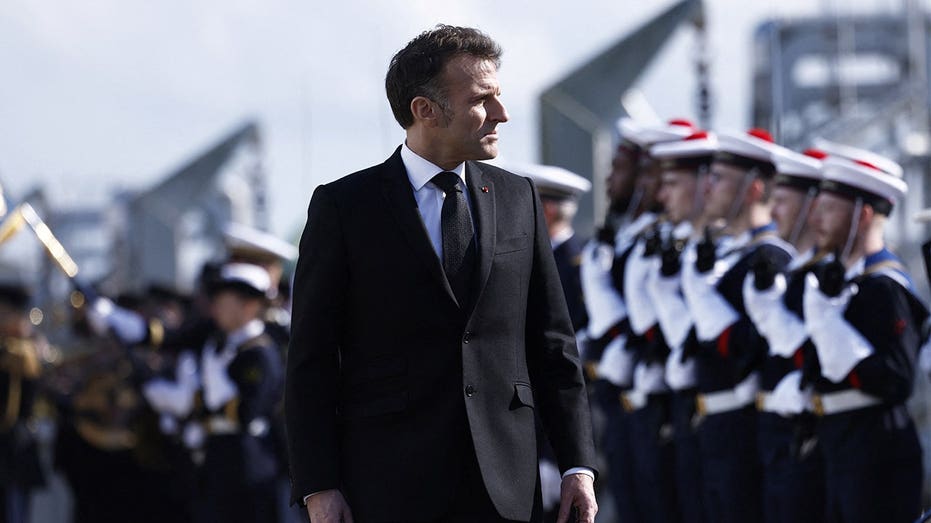
France has added a ninth European country to President Emmanuel Macron's growing nuclear deterrence initiative as European governments move to take on a larger role in its own defense following years of pressure from President Donald Trump to shoulder more of NATO's security burden.
Norway announced Wednesday that it will join France's so-called "forward deterrence" initiative, becoming the latest country to participate in discussions over how France's nuclear arsenal could contribute to European security. The effort also includes Germany, Poland, the Netherlands, Belgium, Denmark, Sweden, Greece and the United Kingdom.
Norwegian Prime Minister Jonas Gahr Støre stressed that "our deterrence will continue to be provided by NATO" and said France had consulted both NATO and the U.S. as the initiative expanded.
EUROPE STEPS UP TO FUND ITS OWN DEFENSE, PROVIDE SECURITY FOR UKRAINE AFTER TRUMP THREATS
The expansion comes as European governments race to strengthen its militaries amid concerns that Russia could eventually push beyond Ukraine and threaten NATO territory. It also marks another step in Macron's effort to position France at the center of a more self-reliant European security framework as NATO allies increase defense spending and military cooperation.
It also follows years of warnings from Trump that the U.S. should not continue carrying a disproportionate share of Europe's defense burden.
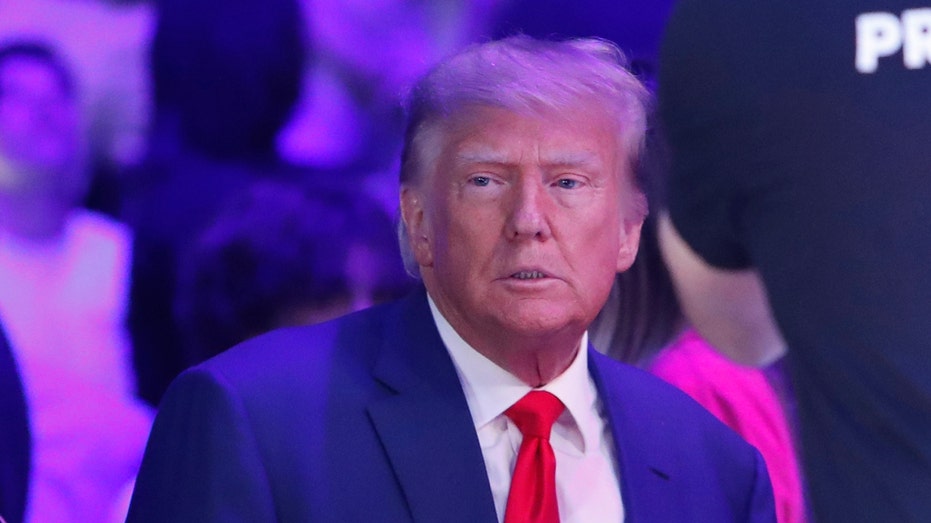
"If they don't pay, I'm not going to defend them," Trump said in 2025 when discussing NATO allies that fail to meet defense spending commitments.
Trump repeatedly has argued that European countries relied too heavily on American military power while underinvesting in their own defenses. At NATO's summit in The Hague earlier in 2026, alliance members agreed to a new goal of spending 5% of GDP on defense and defense-related investments by 2035, a dramatic increase from NATO's longstanding 2% benchmark.
France has not announced plans to permanently station nuclear weapons in nations participating in the initiative and retains sole authority over any decision involving its nuclear arsenal.
Instead, participating countries will take part in discussions, planning and exercises related to French nuclear deterrence while France signals that the security of its European partners is increasingly tied to its own. Macron also has said participating countries could temporarily host French strategic air forces as part of the initiative.
Macron has increasingly positioned France as a leader in Europe's push to take greater responsibility for its own security. France is the European Union's only nuclear-armed country, and the French president has argued that France's nuclear deterrent should play a larger role in protecting the continent as governments across Europe increase military spending and expand defense cooperation.
MOCKING HIM AS 'MICRON,' RUSSIA WARNS MACRON AGAINST MAKING NUCLEAR 'THREATS'
France built an independent nuclear deterrent during the Cold War under President Charles de Gaulle. France conducted its first nuclear test in 1960 and developed its own arsenal in part to ensure the country would never be entirely dependent on Washington for its security.
The arrangement leaves open questions about exactly what commitments France is making.
For decades, Europe's ultimate nuclear backstop has been the U.S. which stations nuclear weapons in several NATO countries including Germany, Belgium and the Netherlands as part of the alliance's broader deterrence posture. France's proposal is less explicit, seeking to strengthen deterrence by making Russia consider the possibility that threats against European allies could implicate French security interests without offering a formal nuclear guarantee.
The initiative highlights how some European governments are looking to strengthen regional defense arrangements even as the U.S. remains NATO's dominant military power and primary nuclear guarantor.
It also comes as Trump and Macron continue a relationship marked by both cooperation and public disagreements.
In March, Trump rated Macron an "8 out of 10" as an ally while discussing French support for a U.S.-led effort to secure the Strait of Hormuz.
"Not perfect, but it's France," Trump said. "We don't expect perfect."
At the same time, Macron has increasingly pushed for Europe to take greater responsibility for its own defense and has publicly broken with Washington on several foreign policy issues, including criticism of U.S. military actions in the Middle East.
Those tensions reflect a broader challenge facing NATO as European governments seek to strengthen their own military capabilities while continuing to rely heavily on the United States for much of the alliance's military power and nuclear deterrence.

 English (US)