
 6 months ago
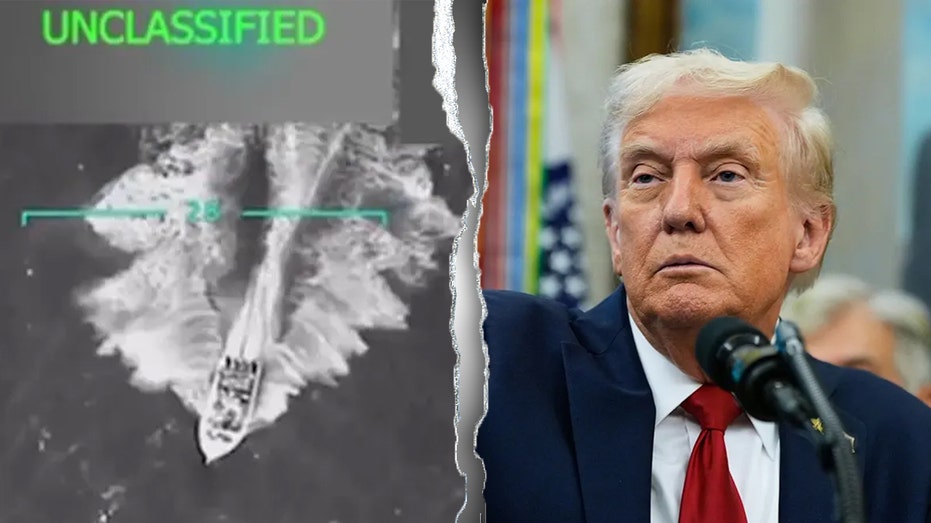
Congress wants to seize the reins and take greater control of U.S. military action in the Caribbean, as the Trump administration’s strikes in the region’s waters come under intense scrutiny.
While some lawmakers have been questioning the legality of strikes that the administration says aim to cut down on the flow of drugs into the U.S., the attacks have attracted heightened scrutiny amid revelations that U.S. forces conducted a second strike killing alleged drug smugglers Sept. 2 – after a first strike left survivors. Lawmakers have voiced concerns about the legality of that strike.
From introducing new legislation restricting funds for the Trump administration’s operations in the region, to urging the White House to release video footage of the second strike, there is mounting interest from Democrats and some Republicans to reassert its power to formally initiate military conflict.
Bolstered Congressional oversight could likely prompt the Trump administration to exercise more caution regarding land strikes, and potentially pivot and employ new strategic tactics, according to experts.
"At this point I think we have to assume that increased Congressional oversight will make military action inside Venezuela less likely, unless the White House presents a clearer case for it," Geoff Ramsey, a senior fellow at the Atlantic Council international affairs think tank, said in an email to Fox News Digital Monday.
Trump has spoken for weeks about potentially conducting land operations within Venezuela, and said Wednesday that strikes on land would start happening "very soon."
Katherine Thompson, a senior fellow in defense and foreign policy studies at the libertarian think tank the Cato Institute, said that while she doesn’t anticipate that the administration will back away from its broader border security mission, she said that the administration will likely "shift their tactics" amid the "pain" of enhanced scrutiny from Capitol Hill.
TOP DEM BLASTS TRUMP'S CARTEL STRIKES, SAYS ADMIN OVERSTEPPING WAR POWERS
Consequences that lawmakers on Capitol Hill could employ include limiting funds for operations in the region, or failing to get behind any nominees that are still awaiting confirmation, Thompson said.
"I think in order to avoid some of those more harsh political punishments, the administration will likely have to shift its strategy," Thompson said.
For example, Thompson said she anticipated that Trump would exercise greater caution regarding potential land strikes within Venezuela, given the possibility both chambers of Congress could pass a joint resolution of disapproval via the War Powers Act opposing military activity in the region.
US ESCALATION WITH MADURO HALTS DEPORTATION FLIGHTS TO VENEZUELA
"Even if he vetoed it, if it looked like Congress had a veto proof majority, that would be a pretty huge indictment to face," Thompson said.
To mitigate the sting of some of these actions from Capitol Hill, Thompson said that the administration could propose an Authorization for the Use of Military Force (AUMF) to back military action in the region, where the administration could make the case that the strikes are within the scope of deterrence and that there is an imminent threat to the U.S., Thompson said.
An AUMF is a resolution that Congress approves, granting the executive branch the ability to employ military force against identified targets.
The Trump administration has leveled a military buildup in the Caribbean and has taken unprecedented steps — including deploying the aircraft carrier Gerald R. Ford — to the region as part of Trump's war against drugs. Likewise, the administration has conducted more than 20 strikes targeting these alleged drug boats since September.
The move also puts greater pressure on Venezuelan President Nicolás Maduro to step down, and Sen. Lindsey Graham, R-S.C., said in October that he believes Trump has made the decision that "it's time" for Maduro to go.
The White House has refused to comment on whether it is pursuing a regime change in Venezuela, although it does not acknowledge Maduro as a legitimate head of state and claims he is the leader of a drug cartel. For example, the Trump administration increased the reward for information leading to Maduro’s arrest in August to $50 million.
HOUSE REPUBLICANS BACK TRUMP'S VENEZUELA MOVES FOR NOW AS ESCALATION UNCERTAINTY LOOMS
The White House told Fox News Digital Thursday that as commander-in-chief, Trump has "full authority to use every element of American power to stop drugs from flooding into our country."
"As President Trump has said, all options are on the table as he works to combat the scourge of narcoterrorism that has resulted in the needless deaths of thousands of innocent Americans," White House spokeswoman Anna Kelly said in a statement to Fox News Digital. "All of these decisive strikes have been in international waters against designated narcoterrorists bringing deadly poison to our shores."
Democrats have moved swiftly to limit the Trump administration’s activity in Venezuela, and members from both sides of the aisle have pushed for greater investigation into the second Sept. 2 strike.
For example, Sens. Jeff Merkley, D-Ore., and Tim Kaine, D-Va., introduced a piece of legislation Thursday called the Prohibiting Unauthorized Military Action in Venezuela Act of 2025, which would bar the Trump administration from using federal funding to conduct military strikes within or against Venezuela unless it receives congressional approval.
"We shouldn’t stumble into an unnecessary war with Venezuela — risking U.S. servicemembers’ lives — with no congressional authorization and incomplete information about the Administration’s objectives, its legal rationale, and the potential consequences of a long-term conflict that could drive migration and irreparably fracture Venezuela," Kaine said in a Thursday statement.
GOP FRACTURES OVER HEGSETH'S 'DOUBLE-TAP' CARIBBEAN STRIKE AS CONGRESS PROBES LEGALITY
Even so, the measure does not place restrictions prohibiting the U.S. from acting in self-defense against an armed attack or threat of an imminent armed attack.
The legislation also comes directly after the introduction of another war powers resolution to curb the Trump administration’s ability to conduct strikes in the Caribbean.
While previous war powers resolutions have failed to garner support for passage in recent months, Kaine, along with Senate Minority Leader Chuck Schumer, D-N.Y., Adam Schiff, D-Calif., and Rand Paul, R-Ky., introduced a war powers resolution Wednesday to bar Trump from using U.S. armed forces to engage in hostilities within or against Venezuela.
These actions come after the Washington Post wrote a report Friday claiming that Secretary of War Pete Hegseth allegedly ordered everyone onboard the alleged drug boat to be killed in a Sept. 2 operation. The Post reported that a second strike was conducted to take out the remaining survivors on the boat.
The White House verified Monday that a second strike had occurred that day, but disputed that Hegseth ever gave an initial order to ensure that everyone on board was killed, when asked specifically about Hegseth’s instructions.
The White House also said Monday that Hegseth had authorized the head of U.S. Special Operations Command Adm. Frank "Mitch" Bradley to conduct the strikes, and that Bradley was the one who ordered and directed the second one.
GOP SAYS TRUMP FACING TOUGHER SCRUTINY FOR CARIBBEAN STRIKES THAN OBAMA DID FOR DRONE PROGRAM
Bradley, who was serving as the commander of Joint Special Operations Command at the time of the strike, appeared before lawmakers on Capitol Hill Thursday for a closed-door briefing. Sen. Tom Cotton, R-Ark., told reporters afterward that Bradley "was very clear that he was given no such order, to give no quarter or to kill them all."
"He was given an order that, of course, was written down in great detail," said Cotton, who leads the Senate Intelligence Committee.
Even so, the top Democrat on the Senate Armed Services Committee Sen. Jack Reed, D-R.I., said that the briefing with Bradley only exacerbated his concerns about the strikes — and urged Trump to follow through on his agreement to release the video footage of the second strike.
"I am deeply disturbed by what I saw this morning," Reed said in a statement Thursday. "The Department of Defense has no choice but to release the complete, unedited footage of the September 2nd strike, as the President has agreed to do."
"This briefing confirmed my worst fears about the nature of the Trump Administration’s military activities, and demonstrates exactly why the Senate Armed Services Committee has repeatedly requested — and been denied — fundamental information, documents, and facts about this operation," Reed said. "This must and will be the only beginning of our investigation into this incident."
Reed also said that he and Senate Armed Services Committee Chair Sen. Roger Wicker, R-Miss., have asked for the executive orders authorizing operations and full videos of the strikes, and other documentation as part of their oversight efforts.
Meanwhile, the White House routinely has defended the legality of the strikes in recent months, and has backed Bradley. For example, Hegseth said Tuesday that carrying out a subsequent strike on the alleged drug boat was the right call.
Altogether, the Trump administration has conducted at least 21 strikes near Venezuela.
The most recent confirmed attack occurred Nov. 15. Hegseth said Tuesday that although there has been a pause in strikes in the Caribbean because alleged drug boats are becoming harder to find, the Trump administration’s crusade against drugs will continue.
"We've only just begun striking narco-boats and putting narco-terrorists at the bottom of the ocean because they've been poisoning the American people," Hegseth said Tuesday.
The Associated Press contributed to this report.


 English (US)