
 3 months ago
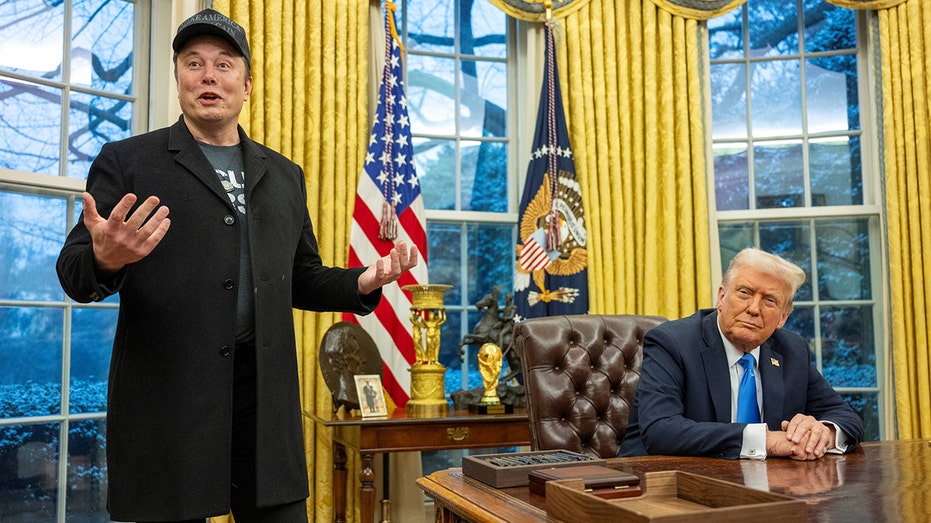
The Department of Government Efficiency’s release of years of anonymous, open-source Medicaid data was hailed by former DOGE chief Elon Musk as a transparency win that will make fraud "easy to find." But turning internet sleuthing into prosecutions could prove far harder for the Justice Department— and legally messy.
Prosecutors and privacy experts warn the leap from anonymous tips to a courtroom case runs through three choke points: patient privacy, proof standards and the uneven quality of state-reported Medicaid data.
The DOGE data will include aggregate-level information about providers, claims, and other general information, according to the Department of Health and Human Services. Senior Trump administration officials have stressed that any information released will be done in accordance with federal privacy laws, in order to avoid identifying individuals or sharing private medical information.
The release comes as the Justice Department ramps up healthcare fraud enforcement, particularly targeting schemes involving Medicaid and other taxpayer-funded programs. Its healthcare fraud "strike force" now operates across 25 federal districts and has brought charges against roughly 5,000 individuals, according to information shared with Fox News Digital.
FLORIDA EXECS SENTENCED IN $233M OBAMACARE FRAUD THAT TARGETED HOMELESS, HURRICANE VICTIMS
But before the Justice Department can chase down new leads, it may have to sort through mountains of flawed data.
Information shared by DOGE in its early days may be imperfect due to its reliance on state data submitted through the Transformed Medicaid Statistical Information System, or T-MSIS — a system that has struggled with data quality and reporting issues that vary widely from state to state. The Centers for Medicare & Medicaid Services is actively working to improve state compliance.
There are open questions as to how the federal government might seek to retroactively "claw back" Medicaid reimbursements from states, in the event fraud is detected.
Others have cautioned that investigations could be hindered by new or thorny legal challenges — including privacy concerns, statute of limitations questions and evidentiary hurdles.
The emphasis on healthcare fraud reflects a broader enforcement priority for Trump and Attorney General Pam Bondi, who built her prosecutorial profile in Florida cracking down on opioids, drug trafficking, and so-called "pill mills."
That enforcement posture has translated into expanded resources for federal prosecutors, particularly within the Justice Department’s Health Care Fraud Unit. Formed in 2007, the unit has grown in scope and funding in recent years as officials confront increasingly complex and large-scale fraud schemes.
The unit has benefited from the creation of its data analytics team in 2017 and the newly announced healthcare fraud data "fusion center" late last year. The center draws on DOJ’s criminal and fraud divisions, the FBI and outside agencies, including HHS-OIG, to leverage cloud computing, artificial intelligence and other analytics tools to more quickly identify and prosecute sweeping healthcare fraud in the public and private sectors, at a rate and scope that would have been unimaginable just years ago.
A Justice Department official with knowledge of the unit’s operations told Fox News Digital that the effort allows prosecutors to identify so-called "outlier" providers earlier.
"It's an area of work that's not only reactive prosecutions — but proactive prosecutions, using data analytics," this person said.
The new data analytics have been crucial to helping DOJ develop and prosecute widespread instances of healthcare fraud cases, as well as major prescription drug cases.
One official pointed to the recent conviction of a California telehealth company founder and CEO who was sentenced to 20 years in prison for illegally prescribing and distributing roughly 40 million Adderall pills, a Schedule II controlled substance, over the internet using false and fraudulent information.
The tools the Justice Department used in that case were critical in quickly identifying the $100 million scheme.
The Justice Department’s Health Care Fraud Unit announced the largest-ever national healthcare fraud takedown in its history in 2025, securing an estimated $15 billion in losses and forfeitures and returning a record $560 million to the public.





 English (US)