
 6 months ago
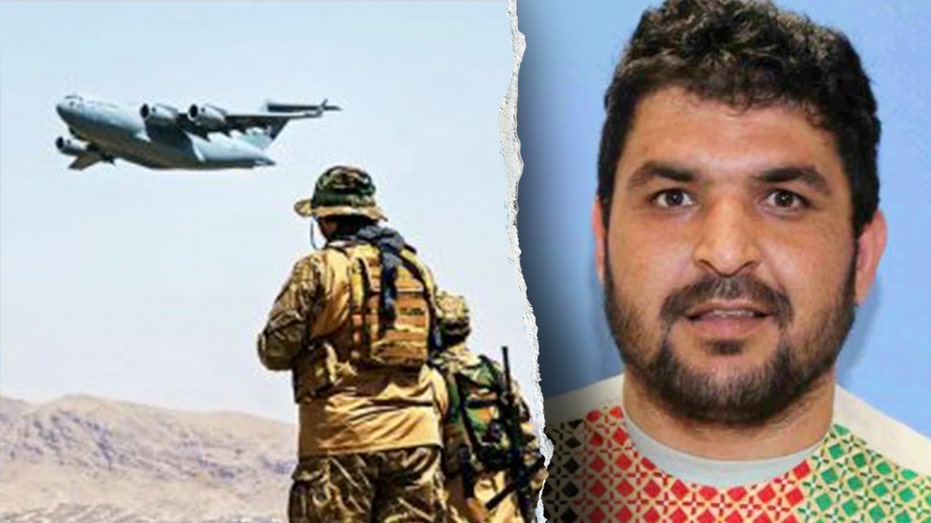
Late last month, when former Afghan commando fighter Rahmanullah Lakanwal vanished without warning from his home in Bellingham, Wash., his wife, Khamila, called his phone, trying to learn where he had gone, according to people familiar with the matter.
"Where are you?" she asked in one call, speaking in their native language of Pashto, according to people briefed on the communications.
He told her, "I’m busy with some friends."
Hours later, she called again. This time, he allegedly answered differently.
FOUR YEARS AFTER ABBEY GATE, VETERANS WHO SAVED CIVILIANS DEMAND ACCOUNTABILITY
"I’m with Tablighis."
He continued, "I’m doing Tabligh," according to sources..
To his wife, the word "Tablighi" had immediate meaning, family contacts said, setting off alarm bells that she shared with Lakanwal’s older brother, Ismail Khosti. In Afghanistan, surnames may vary among family members as they choose different tribal or geographical affiliations. The family is from Lakan district in Khost province.
Tablighi is an Arabic word that means to "inform" or "convey" and it refers today to Tablighi Jamaat, a global Islamic missionary movement established in 1926 in British India as a revivalist wing of the strict Deobandi religious school of thought that today fuels the tyrannical interpretation of Islam practiced by the Afghan Taliban and Pakistani militant groups. Much like its sister group, the Muslim Brotherhood, established in 1928, and other Muslim groups preaching the extremist Wahhabi and Salafi interpretations of Islam, counterterrorism experts say it acts like a conveyor belt to extremism.
Based in Pakistan and India, Tablighi Jamaat’s influence is transnational, with networks operating in mosques and informal religious circles in at least 150 countries, including the U.S. It denounces terrorism publicly, but a report, "Tablighi Jamaat and Its Role in the Global Jihad," by Brussels-based think tank the South Asia Democratic Forum warned the group serves as a "catalyst, gateway, springboard or antechamber" for Islamic radicalization. Several Muslim nations, including Saudi Arabia, Uzbekistan, Tajikistan and Iran, have banned Tabligi Jamaat, along with Russia, which disbanded a terror cell in 2020. In 2021, Saudi Arabia called the group a "danger to society." In the U.S., its missionaries operate freely.
Fox New Digital has learned that Lakanwal’s brother has shared details from the phone calls, previously unreported, with FBI agents. Now, FBI and Department of Homeland Security investigators are scouring the country to see if anyone tied to the Tablighi Jamaat network radicalized Lakanwal, facilitated his cross-country trip or offered assistance, encouragement or financial support for his Thanksgiving eve ambush of West Virginia National Guard service members Sarah Beckstrom, 20, and Andrew Wolfe, 24, as they quietly patrolled 17th Street NW, near the White House. Beckstrom died from her injuries. Wolfe remains critically injured.
On Sunday, Homeland Security Secretary Kristi Noem hinted at this new information, saying on NBC’s "Meet the Press," "We believe he was radicalized since he’s been here in this country. We do believe it was through connections in his home community and state."
Amid reports that Lakanwal was isolated, depressed and psychologically distressed, counterterrorism experts said the new details add a critical dimension to the investigation, noting that untreated trauma, isolation and grievances can create psychological conditions for extremist ideology to gain a foothold, creating "wound collectors," a term that retired FBI special agent Joe Navarro coined to describe extremists, from Usama bin Laden to "Unabomber" Ted Kaczynski, who use perceived injustices to justify violence with "no statute of limitations on their suffering."
While Tablighi Jamaat’s leaders say their movement is apolitical, focused on dawah, an Arabic word for evangelizing or proselytizing, counterterrorism experts have said the movement’s insular missionary culture has appeared along the early radicalization paths of some extremists, including "American Taliban" John Walker Lindh, a convert to Islam who attended Tablighi Jamaat retreats in northern California in the 1990s, including at the Santa Clara County fairgrounds.
After U.S. forces dropped bombs in Afghanistan after the 9/11 attacks, CIA paramilitary officers captured Lindh in a prison near Mazar-i-Sharif, Afghanistan, among imprisoned Taliban militants who revolted, overpowering guards and killing CIA paramilitary officer Mike Spann, the first U.S. casualty of the war. Convicted in 2002 for serving as a soldier for the Taliban, Lindh was freed from jail in 2019 and is free on probation in the U.S. today, tracked by the FBI.
While the Trump administration issued an executive order last month to designate some of Muslim Brotherhood’s chapters as terrorist organizations, Tabligi Jamaat hasn’t been on its radar for action.
Ironically, Deobandi Islam is the religious ideology of the Taliban fighters that Lakanwal and his brother battled for years as members of the "Zero Units," covert forces within the Afghanistan’s intelligence service, the National Directorate of Security, funded, trained and supported by the CIA’s secret "Special Activities Division" to fight the Taliban.
While these Afghan fighters battled extremist interpretations of Islam in Afghanistan over the past 24 years, following the 9/11 attacks, counterterrorism experts note that organizations and mosques established by followers of the Muslim Brotherhood and Tablighi Jamaat have spread worldwide. Tablighi Jamaat representatives in Pakistan and India didn’t respond to multiple requests for comment.
The irony is not lost on Lakanwal’s brother, Khosti, a former company commander in NDS-03, known as the Kandahar Strike Force, where his brother worked as a paramilitary officer, former colleagues said. Over the past several days, he has told former Afghan military and intelligence veterans that he is "ashamed" of his brother’s murderous rampage and he wants the full truth to emerge of how he ended up on 17th Street NW, turning his weapon on the very troops he had spent years protecting.
Literally translated, Lakanwal’s brother said, "This was a wrong action," using the Pashto word ghalat to describe something that is wrong to do.
He told his former colleagues, "I am ashamed of this action," using the word sharmezham, a derivative of the Pashto word for shame, a powerful dynamic in the honor culture of Pashtunwali in which many of the men grew up.
Afghan Lt. Gen. Haibatullah Alizai, 40, the final commander of the National Defense and Security Forces after the president and defense minister fled Afghanistan in mid-August 2021, told Fox News Digital that he was sickened by the news of the attack and solving the mystery of Lakanwal’s path to extremism is now a personal quest.
"It’s a serious question how Rahmanullah Lakanwal became radicalized in the United States," Alizai said. "I feel responsibility for this. I was overall commander of the Afghan armed forces. We must get to the bottom of this because we cannot allow this kind of violence in America or anywhere. We fought Islamic extremism every day against the Taliban. It is our duty as Afghans to help America get justice."
It’s understood Lakanwal’s wife has since moved with her five sons into the home of her brother-in-law and sister-in-law in the San Diego area.
Countering social media rumors, Lakanwal’s brother also told former colleagues that his only other brother, Mohammed Rasul Khan, is not working for the terrorist Haqqani network and died of a heart attack in 2021 in Dubai.
Now, as federal investigators zero in on Lakanwal’s final words to his wife about being with the "Tablighi," they are examining his life in the U.S. over the past four years.
In recent days, media reports have pointed to two emails shared by a volunteer caseworker working with Laknawal to highlight possible psychological issues Lakanwal might have faced, including post-traumatic stress disorder and depression. After receiving the two emails from the case worker, Shawn VanDiver, president of a nonprofit, Afghan Evac, said he shared them with journalists to highlight unmet needs among Afghan military and intelligence veterans who worked beside U.S. forces.
The emails, shared with Fox News Digital on condition they not be published fully, reveal something else: eight references to "manic" road trips and periods when Lakanwal vanished for days with little communication. While investigators haven’t yet established a direct link between the travel and any religious activity, analysts note that Tablighi work requires men to take small-group mission trips, called khuruj, lasting from a few days to several months, to mosques and communities.
According to the emails, after U.S. forces flew Afghan fighters from the "Zero Units" out on Aug. 15, 2021, Lakanwal and his family were moved to the furthest corner of the continental U.S. in Bellingham, a small seaside town, in January 2022. By March 2023, a volunteer case manager wrote in the emails that Lakanwal had lost his job, and he started engaging in "reckless travel," "manic" bursts, where "he will take off in the family car and drive non stop to A. Chicago B. Arizona this time."
In an email on Jan. 11, 2024, she lamented, "My Afghan families, now in WA almost two vears are not thriving." She added, "No matter how many Pashto interpreters we use, and interventions, they are steering their families in ways that in the USA will lead to catastrophe.’
She noted, "They have 3 of us White, American women volunteers trying to patch benefits together and chase [Department of Social and Human Services] requirements and English classes that none of them attend."
Overwhelmed, she wondered, "Perhaps is there a Pashto speaking Afghan male leader or advisor or resource that we can bring to these men to help them collectively and individually make better choices for their families ?"
By Jan. 31, 2024, the caseworker wrote a series of bullet points, including this: "He drives day and night, and sends map pins to one of the volunteer sponsors, and we can grab photos from Instagram stories, but no other communication. His family generally does not know where he is or when he will be back."
She added, "As far as we can tell, these trips are not for any productive purpose." She said he paid for gas with the EBT stipend he received from the government.
She continued: "The last time he came home from a trip, (chicago) he demanded that his wife divorce him, (in front of sponsors who witnessed this)." He apparently deployed a Thabligi interpretation of Islam that says husbands can say, "I divorce you," three times to end a marriage.
Her last bullet point was: "Right now, since he is off on a manic trip that has taken him from Bellingham to Phoenix to Indianapolis, his wife, Khamila, has been home with the boys in a period of relative stability."
Khosti now tells Afghan friends that he wonders how his brother financed the 2,800-mile one-way trip from Bellingham to Washington, D.C., and how he obtained a firearm.
VETERANS GROUPS URGE TRUMP ADMIN TO CONTINUE AFGHAN ALLY SUPPORT PROGRAM AMID BUDGET CUT CONCERNS
When Lakanwal’s company commander, Mohammad Iqbal Selanee, learned the news of the shooting, he was on the job as a janitor in a San Diego-area hotel. He wasn’t embarking on life-or-death missions, like he’d been doing beside U.S. forces in Afghanistan, but he was grateful to America for the gift of a new, safe start for his family.
Looking at the photos of the National Guard soldiers shot by Lakanwal, he said he recalled the faces of U.S. servicemembers he’d fought beside. He also thought of his daughter, 11, as he focused on the image of Beckstrom, the young woman from West Virginia murdered. Spread across the U.S. at far-flung posts, he was hundreds of miles away from Lakanwal as his former charge had fled his home for secret road trips.
Now, he has spent the past several days piecing together Lakanwal’s alleged descent in the U.S. into a new army of zealotry with the Tablighi Jamaat.
"He’s been with Tablighi Jamaat," in the U.S., he said. "He isolated himself. He was away from his friends and family. Some people hurt themselves. He hurt the whole nation."
"I’m not a commander anymore in the military, but as a human being, this is my responsibility to uncover what happened to Rahmanullah, for the safety of everyone. This is a big tragedy. For 20 years, we have fought beside Americans like brothers, and Rahmanullah betrayed that friendship. It is inhumane what he did."
Lakanwal attended the Bellingham Masjid, operated by the Islamic Center of Whatcom County, blocks from his apartment, mosque officials confirmed. In a statement issued on Saturday, mosque officials said Lakanwal was "not an integrated part of our community."
For Ismail Royer, this investigation hits home on another level. A convert to Islam, Royer went to Pakistan in the 1990s after embracing an extremist interpretation of Islam and joined the Lashkar-e-Taiba terrorist group. He later pleaded guilty to weapons charges related to violating U.S. neutrality laws and served 14 years in a maximum security prison. While behind bars, he crossed paths with Muslims convicted of terrorism charges, including Richard Reid, who tried to blow up a plane over the Atlantic by lighting explosives in his shoe, and Lindh, the "American Taliban."
Working now to counter extremism, Royer said Tablighi Jamaat can serve "as a cover for jihadists" and it can be "a waystation, a stage in the path of someone from irreligious to religious," and then, sometimes, violent extremism.
Alizai, the final commander of Afghan military forces, said he fears that religious fundamentalists stoked Lakanwal’s frustrations and urged him to lash out with violence.
"Lakanwal was not a terrorist in Afghanistan. He was fighting terrorism in Afghanistan. We know how these mosques and these Tablighis can play a role to radicalize anybody."
An easy path would be to shame an Afghan military veteran, he said, by saying, "You worked with the U.S.? You were a soldier? So, you killed the Afghans? You killed Muslims? Now they have brought you here. You have no job. You have nothing. You must restore your honor. They act like well-wishers, but they are actually your enemy."
After hunting Taliban extremists in Afghanistan with American soldiers, Alizai said he and fellow Afghan veterans, including Lakanwal’s brother, his company commander, Selanee, and members of the NDS-03 unit are on a new quest.
"We are on a mission to uncover the truth that led to the tragedy on the streets of Washington, D.C.," he said, one West Virginia family in America’s rural hinterland grieving and the other keeping vigil by a hospital bedside.





 English (US)