
 4 months ago
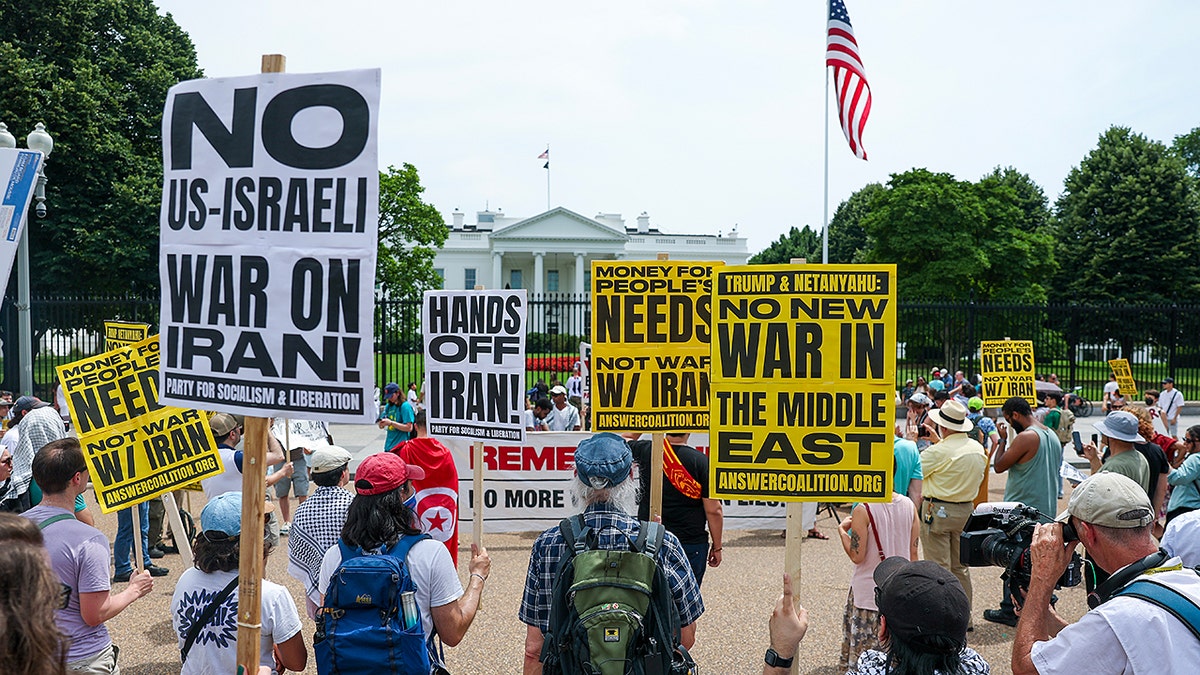
Voters are split on what role the United States should play in the world, while attitudes on the military action in Iran reflect sharp partisanship, according to a new Fox News national survey.
Forty-two percent support the current U.S. military action against Iran, and 58% oppose it, including nearly 4 in 10 who are strongly opposed.
The partisan divide is stark: 77% of Republicans support the effort compared to 12% of Democrats and 28% of independents. Within the GOP, support ranges from 90% among MAGA supporters to 52% of non-MAGA Republicans.
FOX NEWS POLL: VOTERS EXPECT AI TO TRANSFORM OUR LIVES — BUT TODAY IS NOT THAT DAY
The gender divide is less pronounced, with support at 38% among women and 45% among men.
Support is tempered by doubts about the long-term outcome, as more voters believe it will make the United States less safe rather than safer (44% vs. 33%). Another quarter think it won’t make much difference.
On the broader question of what U.S. foreign policy should be, half (50%) say the U.S. should be more engaged and take the lead in world events, while 48% prefer a less engaged, more reactive approach. Republicans favor engagement (72%), while Democrats prefer a less-engaged posture (64%). MAGA supporters are the most pro-engagement (80%), followed by voters who have served in the U.S. military (70%).
FOX NEWS POLL: SOCIALISM GAINING GROUND AMONG VOTERS
Voters largely agree that the most important U.S. objectives in Iran should be reducing its ability to support terrorism in the region (70%), ending Iran’s nuclear weapons program (69%), and protecting the flow of oil from the region (66%). A slim majority says the same about bringing about regime change (53%).
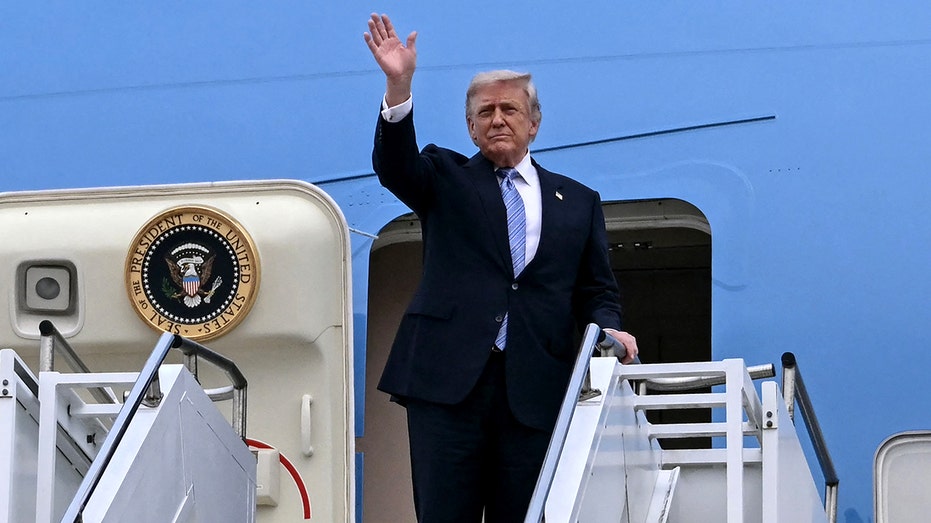
Some 64% of voters disapprove of how President Trump is handling Iran, up from 57% disapproval in January. On foreign policy, 62% disapprove, up from 60% last month.
Trump’s overall job rating stands at 41% approve and 59% disapprove. For comparison, former President Barack Obama’s job rating at this same point in his second term was 40% approve vs. 53% disapprove (March 2014).
The president’s 59% disapproval rating is the highest for either term. Nearly half, 47%, strongly disapprove. Last month, his rating was 43% approve vs. 57% disapprove. A year ago, his marks were underwater by only 2 points: 49% vs. 51%.
Approval of Trump among Republicans has slipped to a second-term low of 84%, down from 92% last March. At the same time, an all-time high 16% of Republicans disapprove. This shift can be attributed, at least in part, to declining support among non-MAGA Republicans, as approval dropped 11 points in the last year among this group (70% in March 2025 to 59% today). Virtually all MAGA Republicans continue to approve of Trump, with 98% approving a year ago and 97% now.
Among Democrats, 95% disapprove -- marking the fourth time this term disapproval of Trump reached a record high. Among independents, 25% approve, 75% disapprove.
Evaluations of the U.S. military’s performance in the Iranian conflict are more positive than negative: 58% rate it as excellent or good, but a substantial 41% say only fair or poor.
When asked how things are going in Iran, 47% of voters say the effort is going well, while a larger 52% disagrees. Only one in five say things are going "very" well (19%).
Most Democrats say things are going badly in Iran (79%) and rate the military negatively (63% only fair or poor), while most Republicans say things are going well (81%) and rate U.S. forces positively (86% excellent or good).
"Historically, foreign policy attitudes have been notoriously context dependent," says Republican Daron Shaw, who conducts Fox News polls with Democrat Chris Anderson. "Today, it seems many partisans rate the Iranian conflict based on their broader perceptions of Trump. Facts on the ground are interpreted to conform to partisan predispositions."
As the conflict enters its fourth week, few expect the swift conclusion Trump predicted. Only 13% believe it will be over in a matter of weeks, while 37% expect it to last months, and 15% anticipate a full year. Some 35% think the end is more than a year away.
Republicans are more likely to expect a quick resolution, while Democrats think it will be a long haul.
On specific goals of the operation, half or more voters gave the U.S. positive marks for disrupting Iran’s leadership structure (55% excellent/good), reducing its ability to develop nuclear weapons (53%), and limiting U.S. troop casualties (50%). At the same time, majorities are more negative on setting clear goals for the operation (54% only fair/poor), limiting civilian casualties (55%), and gaining support from key countries (61%).
Veterans are more supportive than voters overall. They back the current action in Iran (61%), say it is going well (67%), and more of them think it will make the country safer (45%) than less safe (31%). Veterans are also more likely to approve of the president’s job performance overall (55%) and on Iran (53%).
Poll-pourri
How do voters view the White House’s current approach to world affairs? By a 20-point margin, more say it is focused on issues outside of U.S. security than on U.S. national security.
Concern about Iran obtaining nuclear weapons stands at 66%, back to where it was in April 2025, after rising to 78% following the U.S. strikes on Iran in June 2025.
For comparison, more voters are worried about attacks in the U.S. by non-Islamic (70%) and Islamic terrorists (73%). Even larger numbers are concerned about political divisions within the country (80%), gas prices (80%), and healthcare (81%). And of course, inflation remains the biggest worry, with 86% expressing concern about high prices.
CLICK HERE FOR CROSSTABS AND TOPLINE
Conducted March 20-23, 2026, under the direction of Beacon Research (D) and Shaw & Company Research (R), this Fox News survey includes interviews with a sample of 1,001 registered voters randomly selected from a national voter file. Respondents spoke with live interviewers on landlines (104) and cellphones (641) or completed the survey online after receiving a text (256). Results based on the full sample have a margin of sampling error of ±3 percentage points. Sampling error for results among subgroups is higher. In addition to sampling error, question wording and order can influence results. Weights are generally applied to age, race, education, and area variables to ensure the demographics are representative of the registered voter population. Sources for developing weight targets include the most recent American Community Survey, Fox News Voter Analysis, and voter file data.
Fox News’ Victoria Balara contributed to this report.






 English (US)