
 6 months ago

Republicans diverged on Tuesday when asked if the Trump administration should push for regime change in Venezuela.
Despite hopes of a new direction for Venezuela, lawmakers who spoke to Fox News Digital on Tuesday were split on whether the United States should support a regime change in Caracas. Many expressed fears about repeating mistakes of the past, like toppling regimes in the Middle East, while others emphasized a need to remove a security threat in the United States' backyard.
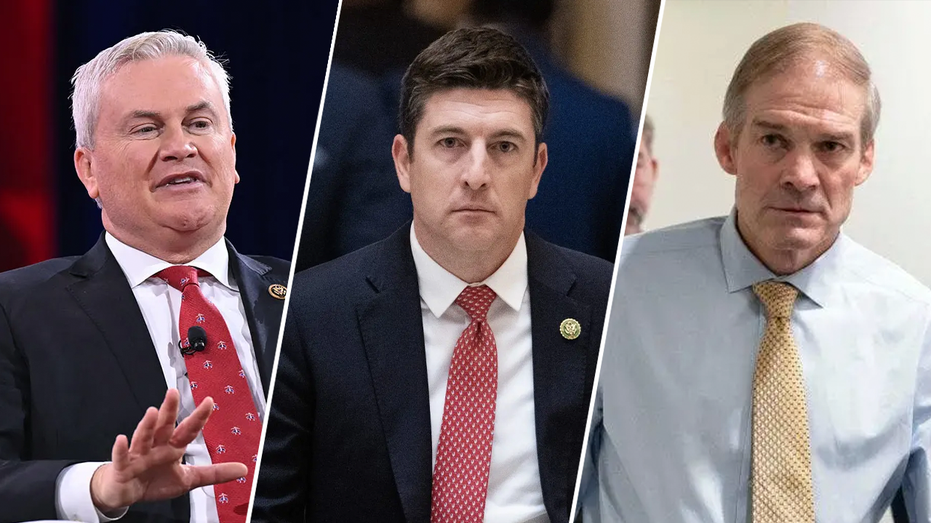
"Yes. Maduro is an illegitimate ruler and extremely dangerous for the Western Hemisphere," Rep. Michael Baumgardner, R-Wash., said, referring to Venezuelan President Nicholás Maduro. "Having a government we could partner with there would be in America’s national security interests."
TRUMP PUSHES PEACE IN EUROPE, PRESSURE IN THE AMERICAS — INSIDE THE TWO-FRONT GAMBLE
Rep. Barry Moore, R-Ala., who agrees with Baumgardner, also framed his stance as a matter of national security.
"If you look at who Maduro is tied to, he’s tied to Iran, China and Russia. Those are not our friends. We know they’re not going to do anything to help us. I think President Trump understands there’s an opportunity here," Moore said.
But not all Republicans agree with Moore and Baumgardner.
"Looking back at our history, it isn’t something that hasn’t played out," Rep. Blake Moore, R-Utah, said. "Peace through strength and strong deterrents against a horrific regime is the best approach, but going in and making it happen on our own? We’re still dealing with the effects of Iran, right?"
Moore, who serves as the House GOP Conference vice chair, said he hopes Venezuela manages to enact political change but expressed pessimism in the current environment.
FORMER MISS VENEZUELA BLAMES 'SOCIALISM AND OPEN BORDERS' FOR HER COUNTRY'S DEVASTATING COLLAPSE
"I am very hopeful that the Maduro regime will be changed. Problem is, they don’t have the ability for free [and] fair elections to be able to make that happen. And that’s a big concern for me," Moore said.
Maduro, the former vice president of Venezuela, first assumed power when the country’s last president, Hugo Chavez, died in 2013. He has held onto power despite widespread criticisms of his leadership, public unrest and disputed election results.
Most recently, María Corina Machado, the clear public favorite for office, fled the country in 2025 after receiving international recognition for having won the Venezuelan presidential election. She received this year’s Nobel Peace Prize for her resistance to Maduro.
Despite the country’s political tensions, other lawmakers like Rep. Eric Burlison, R-Mo., agreed with Moore’s hesitations about direct intervention.
"My view is that we should not have regime change as a defined goal," Burlison said. "We’ve seen that story — how it plays out. We don’t want to be spending a lot of money, time and lives in Venezuela."
Burlison hopes that the country could self-correct and said that the U.S. does have a role in destroying the influence of bad actors in the country, like drug smugglers.
"We need to cut off the power from these drug cartels, seize the drugs, do what we can to reduce their power and then [Venezuela] will probably have a natural regime change because you will remove a lot of the corrupt actors that are propping up a politically corrupt system," he said.


 English (US)