
 8 months ago
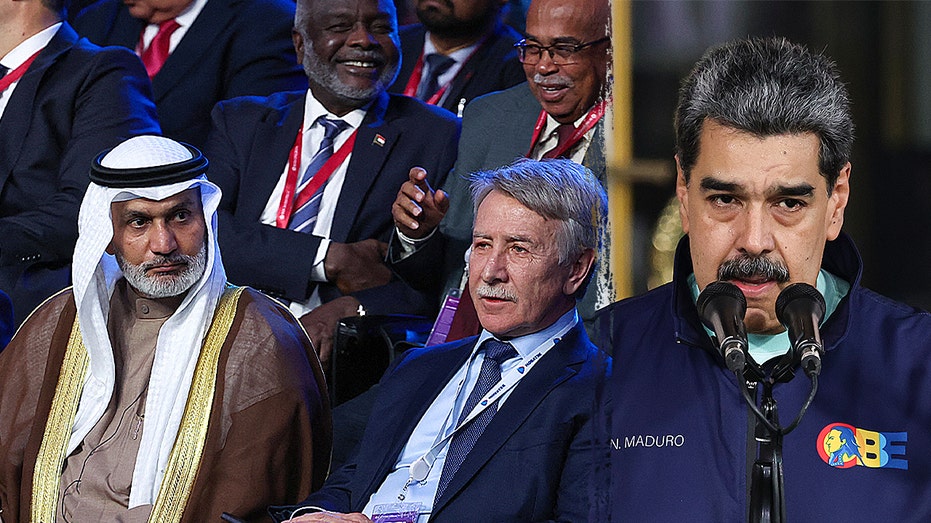
President Maduro’s appeal to oil-rich nations Sunday laid bare just how isolated he has become, a Latin American oil expert says, before describing Venezuela as "broke" and drowning in $150 billion of debt.
The Venezuelan dictator's plea came in a letter in which he appealed to OPEC for support, claiming that U.S. "direct aggression" was undermining Venezuela’s energy sector and threatening global oil stability.
In a letter to OPEC Secretary-General Haitham Al Ghais and published by Venezuelan Foreign Minister Yvan Gil, Maduro wrote, "I hope to count on your best efforts to help stop this aggression, which is growing stronger and seriously threatens the balance of the international energy market, both for producing and consuming countries."
TRUMP GAVE MADURO ULTIMATUM TO FLEE VENEZUELA AS LAND OPERATIONS LOOM: REPORT
"OPEC is unlikely to get involved," Francisco J. Monaldi, Latin American Energy Policy Director, told Fox News Digital.
"Saudi Arabia is the key player, and they will not want to confront the Trump Administration. But more importantly, they never get involved in this kind of conflict," he added.
In his plea, Maduro argued that U.S. actions were designed to "destabilize" Venezuela and urged oil-producing nations to show solidarity.
The U.S. imposed sanctions on Venezuela targeting government officials, state-run industries like oil and mining, and financial transactions in response to concerns over corruption, trafficking and human-rights abuses.
TRUMP PUSHES PEACE IN EUROPE, PRESSURE IN THE AMERICAS — INSIDE THE TWO-FRONT GAMBLE
His request followed President Trump’s order to close U.S. airspace over Venezuela, a move that tightened Washington’s pressure campaign and further restricted the regime’s ability to carry out international business.
Yet Monaldi stressed that Maduro knows his appeal was only symbolic and had "framed" the situation to suit his own narrative over oil.
"Maduro knows perfectly well that he is not going to get the reaction that he would want, but is framing the conflict as a conflict about oil," he argued.
"Venezuela could once again become a major oil producer and produce about 4 million barrels a day in less than a decade, significantly quadrupling their current output.
WASHINGTON’S SHADOW WAR: HOW STRIKES ON CARTELS THREATEN TO COLLAPSE MADURO’S REGIME
"The country could increase production if the oil sector is opened fully to private foreign investment, and that requires regime change.
Four million barrels of oil per day will be the equivalent of about $90 billion per year in revenues, which is similar to what Venezuela received in the best of times.
The income could allow Venezuela to pay the debt back and recover swiftly, micro, economically, although it will take years to get to that figure."
TRUMP SAYS VENEZUELA'S MADURO DOESN’T WANT TO ‘F*** AROUND’ WITH THE US
"Now Venezuela is a country that is broke and has $150 billion of debt," he said.
Tensions escalated further this week after a call between President Trump and Maduro, in which Trump said the Venezuelan leader should step down and leave the country, a direct push toward political transition.
"A regime change is something that the U.S., if they can achieve it, would consider a positive outcome," Monaldi said.
But he emphasized that Washington’s goals extend beyond energy. Venezuela, he said, has endured years of mismanagement and instability, making it not necessarily a safe bet.
The broader U.S. priority, he added, is maintaining the Western Hemisphere.
"The U.S. has priorities to preserve the Western Hemisphere as a region in which geopolitical rivals are not strong," Monaldi said.
"The U.S. wants to reduce crime and drug trafficking in the region and the negative effects that Venezuela has had, you know, that have impacted the rest of the Latin American region," he added.




 English (US)