
 5 months ago
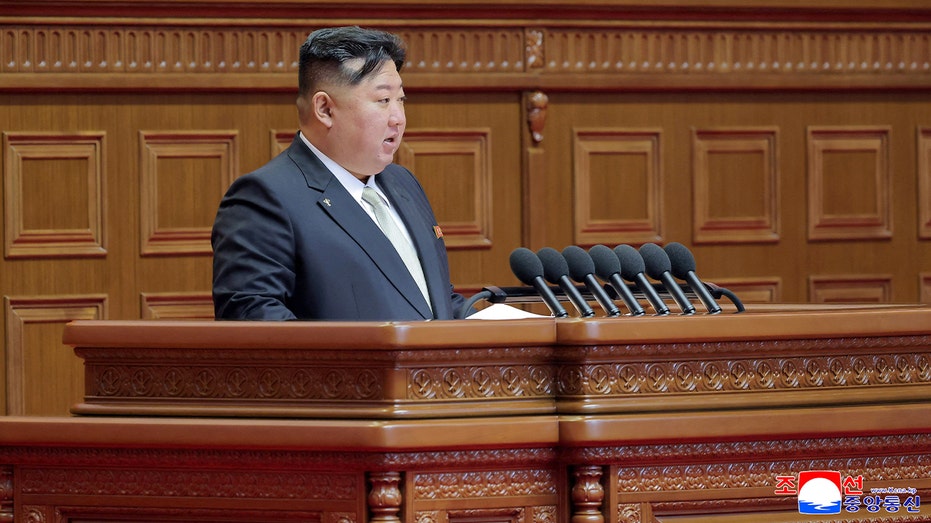
North Korean leader Kim Jong Un was re-elected as general secretary of the ruling Workers’ Party of Korea, according to a press release from the country’s state-run media.
The decision was announced on Monday by the Korean Central News Agency (KCNA), which said the party formally adopted the measure on Feb. 22 during its Ninth Congress.
KCNA described the move as reflecting the "unanimous desire" of party members, the military and the public, praising Kim as the "centre of unity and leadership" and crediting him with strengthening the country’s nuclear deterrence and advancing economic and military development.
The lengthy statement highlighted the country’s achievements over the past five years, including improvements to national defense capabilities and economic planning.
KIM JONG UN APPEARS WITH DAUGHTER AT MAUSOLEUM, FUELING SUCCESSION SPECULATION
It also reaffirmed Kim's role as the guiding figure in the country’s "socialist construction."
Kim, who has been in power since 2011, has served as general secretary of the Workers’ Party since 2021, when he formally assumed the title previously held by his late father, Kim Jong Il.
An analysis by the American Enterprise Institute (AEI) suggests North Korea could use the conclusion of the Ninth Party Congress to unveil new strategic weapons and highlight progress under its 2021–2025 military modernization plan.
SOUTH KOREAN COURT RULES EX-PRESIDENT YOON SUK YEOL GUILTY IN INSURRECTION TRIAL
The report notes Pyongyang may showcase advances in intercontinental ballistic missiles, submarine-launched ballistic missiles and hypersonic glide vehicles as it seeks to improve the survivability and accuracy of its nuclear capabilities.
AEI assessed that Kim is also likely to outline modernization goals for the 2026–2030 period, potentially emphasizing second-strike capabilities, faster launch readiness and more diverse delivery systems.
Beyond military issues, the analysis says Kim may frame the current five-year economic plan as a success, pointing to increased trade with Russia and China and efforts under his "20×10 Regional Development Policy" to reduce rural-urban disparities.






 English (US)