
 2 months ago
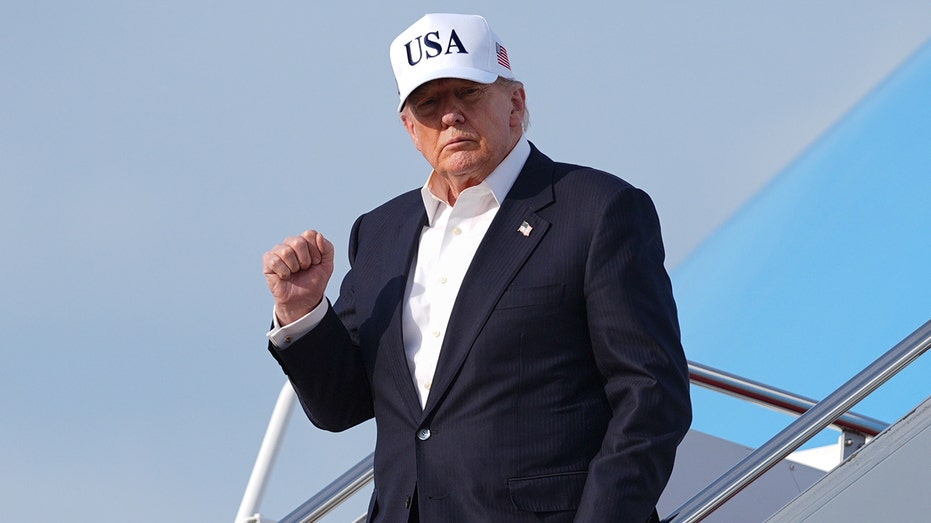
The Trump administration says the $1.778 billion Justice Department "Anti-Weaponization Fund" will compensate Americans unfairly targeted by politicized federal investigations on a "case-by-case" basis, pushing back on critics who have portrayed the program as a taxpayer-funded payout for Jan. 6 rioters and Trump allies.
Heated dispute over the fund centers on who will ultimately benefit from it, with Trump administration officials saying it is intended to compensate individuals harmed by "weaponized" federal investigations, such as pro-lifers targeted by the Biden administration, while Democratic critics fear it could allow politically connected figures or some Jan. 6 defendants to seek taxpayer-funded payments.
"Republicans can apply for it. Democrats can apply for it," Vice President J.D. Vance said during a Tuesday White House briefing in answer to the critics. "If Hunter Biden wants to apply for this particular fund, he is welcome to."
The Anti-Weaponization Fund is unusual because it emerged from a lawsuit settlement between Trump and the IRS, an agency he oversees as president, raising concerns among lawmakers and commentators about potential conflicts of interest.
MS NOW contributor Joe Scarborough alleged that the Anti-Weaponization Fund would be funneled to those convicted in the Jan. 6, 2021, Capitol riots. On his first day in office, Trump issued pardons and commutations to more than 1,500 people involved in the Capitol riots.
"We got this billion-dollar ‘Marie Antoinette’ ballroom, now that they’re talking about funding and $1 billion plus slush fund for people who beat the hell out of cops," Scarborough said. "It is a slush fund, a weaponization slush fund for supporters of Donald Trump, JD Vance and the Republican Party."
But the Trump administration's grievances with the "weaponization" of the Justice Department extend far beyond Biden-era prosecutions of those involved in the Jan. 6, 2021, Capitol Hill riot.
Biden's Justice Department prosecuted more than 50 pro-life activists who were accused of violating the Freedom of Access to Clinic Entrances Act (FACE Act) between 2021 and 2024. Since returning to office, Trump pardoned dozens of pro-life activists, some of whom were serving jail time.
The Trump Justice Department has also accused Biden-era officials of "zealously pursuing" prosecutions against Christians in its "2026 Report by the Task Force to Eradicate Anti-Christian Bias," potentially opening the door for another category of people who could seek compensation through the fund.
Still, Trump faces criticism over the fund even from his own party. Sen. John Thune, R-SD, the top Republican leader in the Senate, said he wasn't a "big fan" of the fund's creation and that he "was not sure exactly how they intend to use it."
BIDEN DOJ WEAPONIZED FACE ACT AGAINST PRO-LIFE AMERICANS, 882-REPORT ALLEGES
"I think that there are, and will continue to be, a lot of questions around that, that the administration is going to have to answer," Thune said.
Justice Department officials and some legal experts say the fund, while unusual and politically controversial, falls within the government’s legal authority and that payments aren't guaranteed.
The Anti-Weaponization Fund was born out of a settlement between President Donald Trump and the Internal Revenue Service. Trump filed the lawsuit against in January over the unauthorized disclosure of his tax records.
Claims will be determined by a five-person board appointed by the Attorney General, with at least one member selected with consultation with congressional leadership, according to a Justice Department press release. At any point in time, the president has the power to remove a member without cause.
Under the settlement agreement, the Anti-Weaponization Fund will evaluate claims by looking at the "totality of the circumstances." Those factors considered include how strong a person’s claim is and what evidence supports it, the financial harm they allegedly suffered — including legal fees — whether they spent time in prison and whether they have already received compensation or other relief elsewhere.
The agreement also gives the board discretion to weigh "other factors" it considers fair and appropriate when deciding whether someone qualifies for compensation.
"This is about seeking accountability for all Americans who were victims of law fare and weaponization: millions of Americans whose online speech was censored at the behest of the government, parents silenced at school boards, Senators whose records were secretly subpoenaed, churchgoers targeted by the FBI, and so on," a Justice Department document stated.
The Anti-Weaponization Fund will last until December 1, 2028.
APOLOGIES AND CASH HEADED TO ALLEGED ‘WEAPONIZATION’ VICTIMS IN BILLION-DOLLAR TRUMP SETTLEMENT
Funding for the Anti-Weaponization Fund is coming from the Judgment Fund, which is a permanent Treasury account used to pay for settlements and claims against the government.
While the Justice Department pointed to the Obama administration's creation of "Keepseagle," a $760 million fund for victims of racism by the federal government as precedent for the creation of the fund, legal experts say there are key distinctions between the two. For instance, payouts in Keepseagle were made out to people a part of a class action lawsuit against the government; whereas anyone can apply for a claim with the Anti-Weaponization Fund.
"The Judgment Fund is for lawsuits," Adam Zimmerman, a professor at USC Gould School of Law told PBS News. "It's not for an amorphous group of people who feel like they've been wronged generally by a prior administration."
But unlike the Keepseagle, which distributed leftover funds to nonprofits, the Anti-Weaponization Fund will return remaining funds back to the Department of Commerce. Although, the practice of disbursing leftover funds to related third party organizations, which occurred in Keepseagle, is not uncommon in class action lawsuits.





 English (US)