
 4 months ago
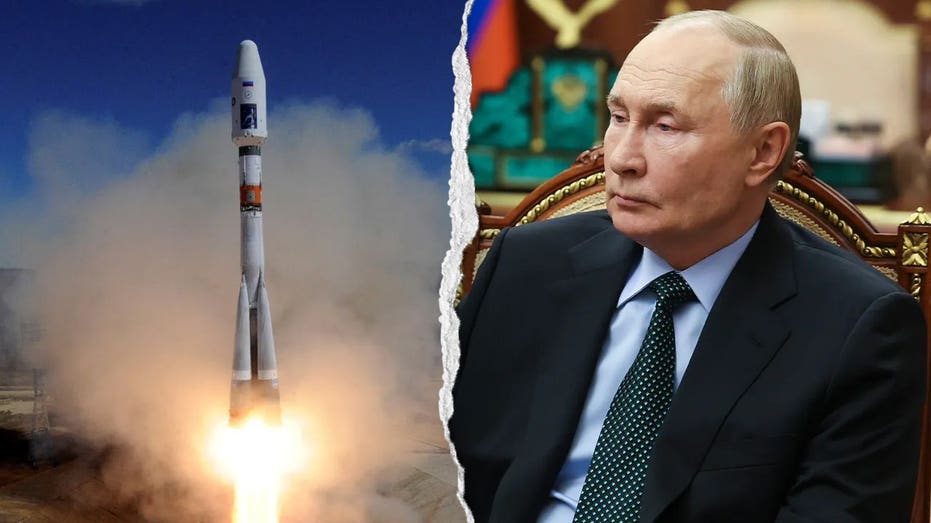
The head of U.S. Space Command said the U.S. is "very concerned" that Russia may be developing a nuclear weapon in space to target satellites, warning such a move could disrupt global communications, GPS systems and daily life on Earth.
Gen. Stephen N. Whiting, the commander of U.S. Space Command, made the remarks during an appearance on The General & The Journalist, a weekly podcast by The Times.
"Russia remains a very historic and sophisticated space power. Yes, they have been hurt by economic sanctions, but they continue to invest in counter-space weapons, with the most concerning reports being that they are potentially thinking about placing on orbit a nuclear ASAT weapon," he added. "That would violate the Outer Space Treaty that they're a party to, and it would hold at risk everyone's satellites in low Earth orbit, and that would be an outcome that we just couldn't tolerate."
Whiting noted that space is considered a global commons, with the 1967 Outer Space Treaty — signed by nearly every nation, including all major space powers — prohibiting claims of sovereignty.
SWEDEN JAMS SUSPECTED RUSSIAN DRONE NEAR FRENCH CARRIER AS NATO WAR FEARS RISE
He said that differs from earlier eras when explorers would plant flags to claim land for a king or country.
Whiting stopped short of confirming the underlying intelligence, but emphasized the seriousness of the concern.
"I won’t speak about our intelligence sources and methods, but obviously it’s a report that we’re very concerned about," he said.
PUTIN PUTS 'NUCLEAR TRIAD' ON FAST TRACK, ZELENSKYY CLAIMS ‘WORLD WAR 3’ UNDERWAY
Fox News Digital has reached out to the Pentagon for further comment on the matter.
A nuclear detonation in low Earth orbit — which spans roughly 100 to 1,200 miles above Earth — could have devastating consequences for both military and civilian infrastructure, according to Whiting.
"All of low Earth orbit would be at risk, and you know, that's over 10,000 satellites today with these new proliferated low earth orbit constellations like Starlink," he said.
RUSSIA, CHINA SQUEEZE US ARCTIC DEFENSE ZONE AS TRUMP EYES GREENLAND
Such an event could cripple satellite networks that underpin GPS, communications, financial systems and global internet access.
Whiting noted that most people do not realize how dependent modern life is on space-based systems.
"The average citizen around the world probably doesn’t think about how space enables their life every day, but if they carry a smartphone in their pocket, they are leveraging space multiple times a day," he said.
US COMMANDER SAYS RUSSIA AND CHINA'S ARCTIC PATROLS ARE 'NOT FOR PEACEFUL PURPOSES'
He suggested Russia may view space-based attacks as a way to offset what it sees as U.S. and NATO advantages in conventional warfare.
"From a Russian perspective, they look at the United States, they look at NATO and they see a conventional overmatch there of conventional arms," Whiting said. "They believe that novel ways of trying to undermine the United States and NATO, such as by neutralizing our space capabilities, helps them to level the battlefield."
Whiting also pointed to ongoing Russian activity targeting satellite systems, including widespread interference in Europe.
‘THEY WERE SPYING’: SULLIVAN SOUNDS ALARM ON JOINT RUSSIA-CHINA MOVES IN US ARCTIC ZONE
"Clearly across Europe, we have seen sustained satellite communication jamming and GPS jamming," he said.
He warned that such actions are already having real-world consequences, particularly for civilian aviation.
"The real problem with that GPS jamming, for example, is it’s being done in a way that’s affecting civil aviation in Eastern Europe and across southern Europe," Whiting said.
"When we put at risk civilian airliners full of citizens just trying to go on business or holiday, that’s incredibly problematic," he added. "We do not want to see this normalization of trying to interfere with other satellites."






 English (US)